
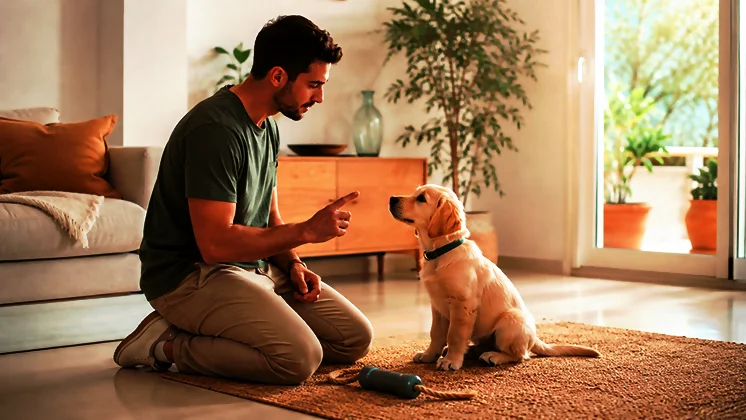
Bringing a puppy home is exciting, but it can also be chaotic: biting, toilet accidents, crying, overexcitement, following people everywhere and not knowing what to allow. The first days do not need to be perfect, but they should create clarity, safety and good routines.
At YunDog.es we work with real families and real dogs in everyday environments. The aim is not to create robotic obedience, but to improve calm, communication, management of the environment and useful behaviours that make life easier.
If you live in San Javier, Mar Menor, San Pedro del Pinatar, Los Alcázares, Santiago de la Ribera and surrounding areas, a professional assessment can help you understand what your dog is really showing and where to start safely.
What should puppy training focus on first?
Before trying to correct the behaviour, it is important to understand what is maintaining it. Similar behaviours can have very different causes depending on the dog, the family routine and the environment.
Routine and predictability
Puppies learn faster when eating, sleeping, toilet breaks, play and rest follow a predictable structure.
Rest and recovery
A tired puppy can become more mouthy and chaotic. Good sleep is part of good education.
Toilet habits
Frequent, calm opportunities outside or in the chosen toilet area help the puppy learn where to go without punishment.
Bite inhibition and alternatives
Puppies explore with their mouth. The goal is to redirect, manage intensity and teach appropriate outlets.
Safe socialisation
Socialisation is not exposing the puppy to everything at full intensity. It is creating positive, controlled experiences.
Common signs to look for
- The puppy bites hands, clothes or feet
- There are toilet accidents in the house
- The puppy cries when left alone
- The puppy becomes overexcited in the evening
- The family gives different rules
- The puppy struggles to settle
These signs do not mean that your dog is “bad”. They are information. They tell us that the dog may need clearer guidance, better management, gradual exposure or a more specific behaviour plan.
Common mistakes that can make the problem worse
Allowing everything because the puppy is small
Habits created now can become harder to change later. Gentle boundaries are not harsh; they create security.
Using punishment for toilet accidents
Punishment can make the puppy hide to eliminate and increase stress. Management and timing work better.
Overstimulating the puppy
Too much play, visitors or activity can create a puppy that cannot switch off.
Waiting until problems appear
Early guidance prevents many behaviour problems and helps the family act consistently.
What you can start doing
The following guidelines are a starting point, not a substitute for a professional assessment. They can help you work with more clarity while avoiding the most common errors.
Set a simple daily routine
Plan toilet breaks, meals, rest, short play, calm handling and short training moments.
Reward what you want to see again
Calm behaviour, checking in, toileting in the right place and settling should be noticed and reinforced.
Create a safe rest area
The puppy needs a place where nothing intense happens and rest is protected.
Teach useful basics gently
Name response, recall, calm handling, following you, waiting and settling are more useful than tricks at this stage.
When to ask for professional help
Professional help is especially important when the behaviour is repeated, increasing, affecting daily life or linked to fear, aggression, strong stress, anxiety or loss of control.
- The puppy bites very hard and cannot stop
- There is intense fear, hiding or panic outside
- The puppy cannot rest or is constantly overexcited
- There are problems with children, other dogs or visitors
- You feel unsure about routines and boundaries
A good assessment helps identify whether the priority is education, management, emotional regulation, gradual exposure or a specific behaviour modification plan.
How YunDog.es can help
At YunDog.es we help families build a puppy plan adapted to their home, lifestyle and future goals.
The work can include toilet routines, bite management, calm, socialisation, first walks, handling, recall and early obedience for everyday life.
We work in real contexts: home routines, streets, walks, local areas, controlled exposure and practical exercises that the family can repeat with clear criteria.
Tell us what is happening with your dog and we will assess the best starting point.
Frequently asked questions
When should puppy training start?
From the first day, but in short, gentle and age-appropriate ways. Training means guiding daily life, not demanding adult behaviour.
Can my puppy go outside before vaccines are finished?
This should be discussed with your vet, but safe social exposure can often be planned carefully to avoid isolation and fear.
Is puppy biting normal?
Yes, but intensity, frequency and context matter. The puppy needs alternatives and calm management.
Need help with your dog?
If this situation is affecting your walks, your home life or your confidence with your dog, you do not need to keep trying random advice. A clear assessment can save time and prevent the problem from becoming more established.
At YunDog.es we can help you understand what your dog needs and build a realistic plan for better everyday life.
J. Blesa, dog trainer and behaviour modification specialist
Need help with your dog?
If your dog pulls on the lead, barks, reacts to other dogs, struggles at home or you do not know how to manage the situation, tell us about your case.
Contact YunDog