
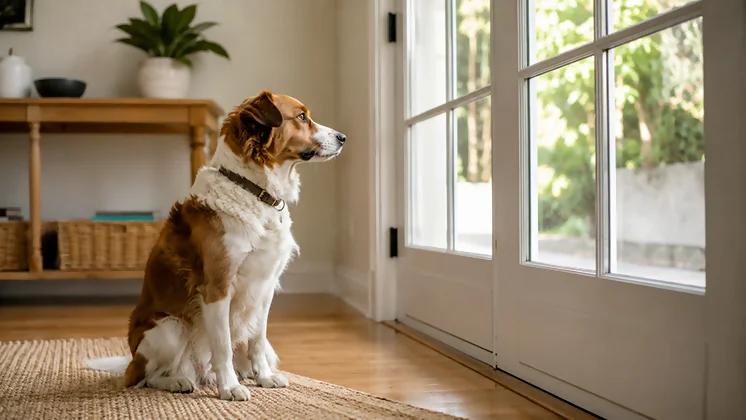
When a dog cannot cope with being left alone, the problem affects the whole family: neighbours complain, cameras show distress, leaving the house becomes stressful and the dog may bark, cry, destroy, scratch doors or pace without resting.
At YunDog.es we work with real families and real dogs in everyday environments. The aim is not to create robotic obedience, but to improve calm, communication, management of the environment and useful behaviours that make life easier.
If you live in San Javier, Mar Menor, San Pedro del Pinatar, Los Alcázares, Santiago de la Ribera and surrounding areas, a professional assessment can help you understand what your dog is really showing and where to start safely.
What may be happening when a dog cannot stay alone?
Before trying to correct the behaviour, it is important to understand what is maintaining it. Similar behaviours can have very different causes depending on the dog, the family routine and the environment.
Anxiety or panic when alone
Some dogs are not being naughty; they are emotionally unable to cope with separation.
Hyperattachment or poor independence skills
A dog that follows the family constantly may struggle when contact suddenly disappears.
Previous learning and routine changes
Moving house, schedule changes, adoption history or long periods with constant company can influence the problem.
Lack of gradual alone-time training
Many dogs are left for long periods before learning to tolerate short, calm separations.
Medical or age-related factors
Pain, cognitive changes or health issues can worsen anxiety-like behaviours and should be considered.
Common signs to look for
- Barking, howling or crying when alone
- Scratching doors or windows
- Destruction near exits
- Pacing without resting
- Refusing food toys when alone
- Panic when the person prepares to leave
These signs do not mean that your dog is “bad”. They are information. They tell us that the dog may need clearer guidance, better management, gradual exposure or a more specific behaviour plan.
Common mistakes that can make the problem worse
Leaving the dog to “cry it out”
For panic-based cases, flooding can make the fear worse and damage progress.
Using only food toys
Kongs and chews can help some dogs, but they do not solve true separation anxiety by themselves.
Practising absences that are too long
If every session ends in panic, the dog rehearses the problem rather than learning calm.
Ignoring possible medical factors
Sudden changes or intense distress should also be discussed with a vet when appropriate.
What you can start doing
The following guidelines are a starting point, not a substitute for a professional assessment. They can help you work with more clarity while avoiding the most common errors.
Record what happens
A camera can show whether the dog rests, barks briefly, panics, destroys or only reacts at certain moments.
Lower the difficulty
Start with separations the dog can handle, even if they are very short.
Work departure cues separately
Keys, shoes or bags can trigger anxiety before you even leave. They can be desensitised gradually.
Avoid making the problem bigger while you train
Management, help from family or temporary alternatives may be needed while training progresses.
When to ask for professional help
Professional help is especially important when the behaviour is repeated, increasing, affecting daily life or linked to fear, aggression, strong stress, anxiety or loss of control.
- The dog panics when left alone
- There are complaints from neighbours
- There is destruction, drooling or attempts to escape
- The dog cannot eat or rest when alone
- The problem has continued for months or years
A good assessment helps identify whether the priority is education, management, emotional regulation, gradual exposure or a specific behaviour modification plan.
How YunDog.es can help
At YunDog.es we assess the dog’s behaviour when alone, the routine, attachment patterns, triggers, recovery and realistic management options.
The plan may include gradual alone-time work, independence skills, departure cue desensitisation, calm routines and support for the family.
We work in real contexts: home routines, streets, walks, local areas, controlled exposure and practical exercises that the family can repeat with clear criteria.
Tell us what is happening with your dog and we will assess the best starting point.
Frequently asked questions
Is separation anxiety the same as boredom?
No. Boredom can cause problems, but separation anxiety involves distress linked to being alone or separated from specific people.
Should I punish destruction?
No. If destruction happens during anxiety, punishment does not teach the dog to feel safe alone.
Can it improve?
Yes, but it usually requires a gradual plan and realistic management. Severe cases should be assessed professionally.
Need help with your dog?
If this situation is affecting your walks, your home life or your confidence with your dog, you do not need to keep trying random advice. A clear assessment can save time and prevent the problem from becoming more established.
At YunDog.es we can help you understand what your dog needs and build a realistic plan for better everyday life.
J. Blesa, dog trainer and behaviour modification specialist
Need help with your dog?
If your dog pulls on the lead, barks, reacts to other dogs, struggles at home or you do not know how to manage the situation, tell us about your case.
Contact YunDog