
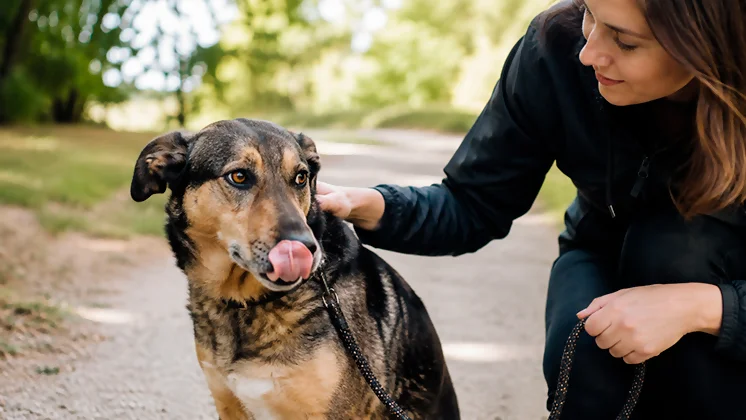
Stress in dogs is not always dramatic. Sometimes it looks like barking, restlessness, licking, pulling, overexcitement, poor sleep, reactivity or inability to settle. Recognising stress early helps protect wellbeing and prevent behaviour problems from becoming stronger.
At YunDog.es we work with real families and real dogs in everyday environments. The aim is not to create robotic obedience, but to improve calm, communication, management of the environment and useful behaviours that make life easier.
If you live in San Javier, Mar Menor, San Pedro del Pinatar, Los Alcázares, Santiago de la Ribera and surrounding areas, a professional assessment can help you understand what your dog is really showing and where to start safely.
What can create stress in dogs?
Before trying to correct the behaviour, it is important to understand what is maintaining it. Similar behaviours can have very different causes depending on the dog, the family routine and the environment.
Too much stimulation
Busy streets, visitors, noise, uncontrolled greetings and intense play can keep a dog over aroused.
Too little predictability
Unclear routines, inconsistent rules and unpredictable handling can make some dogs insecure.
Poor rest
Without quality sleep, the dog’s ability to regulate emotions decreases.
Fear or repeated pressure
Being forced into situations the dog cannot manage can create chronic tension.
Pain or medical issues
Behaviour changes can have physical causes, so sudden or unusual stress signs should be checked.
Common signs to look for
- Panting without heat or exercise
- Excessive licking, yawning or shaking off
- Restlessness and poor sleep
- Barking at noises or movement
- Pulling, scanning or hypervigilance outside
- Sudden irritability or avoidance
These signs do not mean that your dog is “bad”. They are information. They tell us that the dog may need clearer guidance, better management, gradual exposure or a more specific behaviour plan.
Common mistakes that can make the problem worse
Calling every problem “bad behaviour”
Many unwanted behaviours are signs of stress, confusion or lack of coping skills.
Adding more exercise without assessing
Some dogs need calmer routines, not more intensity.
Ignoring rest
Rest is not optional. It is part of emotional regulation.
Using pressure when the dog is overwhelmed
More pressure can reduce trust and increase defensive responses.
What you can start doing
The following guidelines are a starting point, not a substitute for a professional assessment. They can help you work with more clarity while avoiding the most common errors.
Observe patterns
Write down when stress appears: before walks, after visitors, at night, with dogs, with noise or when alone.
Protect rest
Create quiet periods and avoid constant interruption.
Use calm enrichment
Olfactory activities and simple problem-solving can help when used with criteria.
Reduce avoidable triggers
Management is not failure; it creates space for learning.
When to ask for professional help
Professional help is especially important when the behaviour is repeated, increasing, affecting daily life or linked to fear, aggression, strong stress, anxiety or loss of control.
- Stress signs are daily
- The dog reacts aggressively or defensively
- The dog cannot rest properly
- There are sudden behaviour changes
- You suspect anxiety, fear or pain
A good assessment helps identify whether the priority is education, management, emotional regulation, gradual exposure or a specific behaviour modification plan.
How YunDog.es can help
At YunDog.es we assess stress from a practical point of view: routine, walks, rest, environment, communication, activity level and emotional triggers.
The objective is to reduce unnecessary pressure and build a plan that helps the dog recover, learn and live more calmly.
We work in real contexts: home routines, streets, walks, local areas, controlled exposure and practical exercises that the family can repeat with clear criteria.
Tell us what is happening with your dog and we will assess the best starting point.
Frequently asked questions
Is stress always bad?
No. Short stress can be normal. The problem is when it is intense, repeated or the dog cannot recover.
Can stress cause behaviour problems?
Yes. Stress can contribute to barking, reactivity, destruction, irritability and poor attention.
Do calming products solve stress?
They may help in some cases, but they do not replace changes in routine, environment and behaviour work.
Need help with your dog?
If this situation is affecting your walks, your home life or your confidence with your dog, you do not need to keep trying random advice. A clear assessment can save time and prevent the problem from becoming more established.
At YunDog.es we can help you understand what your dog needs and build a realistic plan for better everyday life.
J. Blesa, dog trainer and behaviour modification specialist
Need help with your dog?
If your dog pulls on the lead, barks, reacts to other dogs, struggles at home or you do not know how to manage the situation, tell us about your case.
Contact YunDog