
1
Growling or threats
The dog is warning that they are uncomfortable and may escalate if the signals are ignored.
If your dog growls, threatens, lunges, snaps, bites or creates risky situations, it is important to assess the case properly and set up a safe plan before continuing exposure.
Tell us your situationAggressive behaviour can appear because of fear, pain, insecurity, resource guarding, space defence, frustration, previous experiences, poor emotional regulation or learned behaviour.
Before labelling the dog, we need to understand what is happening, what triggers the behaviour, which warning signs appear first and what level of risk exists for people, dogs or other animals.
If these behaviours appear, prevention is essential and improvising can increase risk.
The dog is warning that they are uncomfortable and may escalate if the signals are ignored.
The dog has already used their mouth, marked skin, caused injury or bitten with more intensity.
They react towards people, dogs, bikes, visitors or other triggers with loss of control.
They defend food, toys, beds, people, spaces or objects with tension or threat.
They react to touch, collar, harness, grooming, veterinary handling or physical contact.
There are conflicts with children, visitors, family members, other dogs or animals in the household.
The priority is safety, risk assessment and a realistic plan.
We analyse intensity, frequency, bite history, context and the people or animals involved.
We look for what activates the behaviour: fear, resources, invasion, pain, frustration or stress.
We define handling, distance, environmental control, prevention and muzzle work if the case requires it.
We prevent repeated situations that could lead to new bites or reinforce the behaviour pattern.
We work on distance, emotion, self-control, alternative behaviours and controlled exposure.
Everyone must know what to do, what to avoid and how to handle the dog safely.
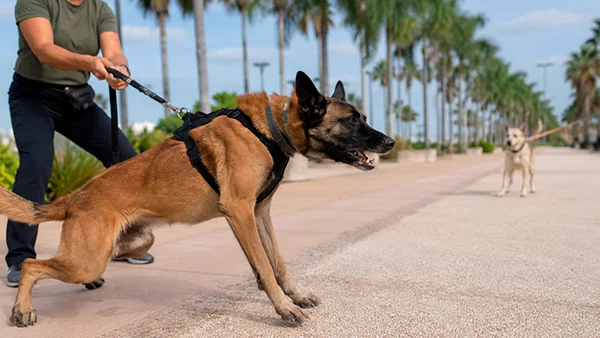
We work with prevention, safety and behaviour modification to reduce risk and improve how the dog is managed.
In some cases, aggressive behaviour may be linked to pain, illness, hormonal changes, cognitive decline, neurological issues or physical discomfort. If there is any suspicion, we recommend veterinary assessment.
If there is a bite risk, a properly conditioned muzzle can be a safety tool, not a punishment.
The main option for cases involving growling, threats, bites or risk in daily life.
View behaviour modification →Recommended if the problem appears around food, objects, beds, spaces or people.
View resource guarding →Can help guide first safety measures and decide the best type of intervention.
View online advice →